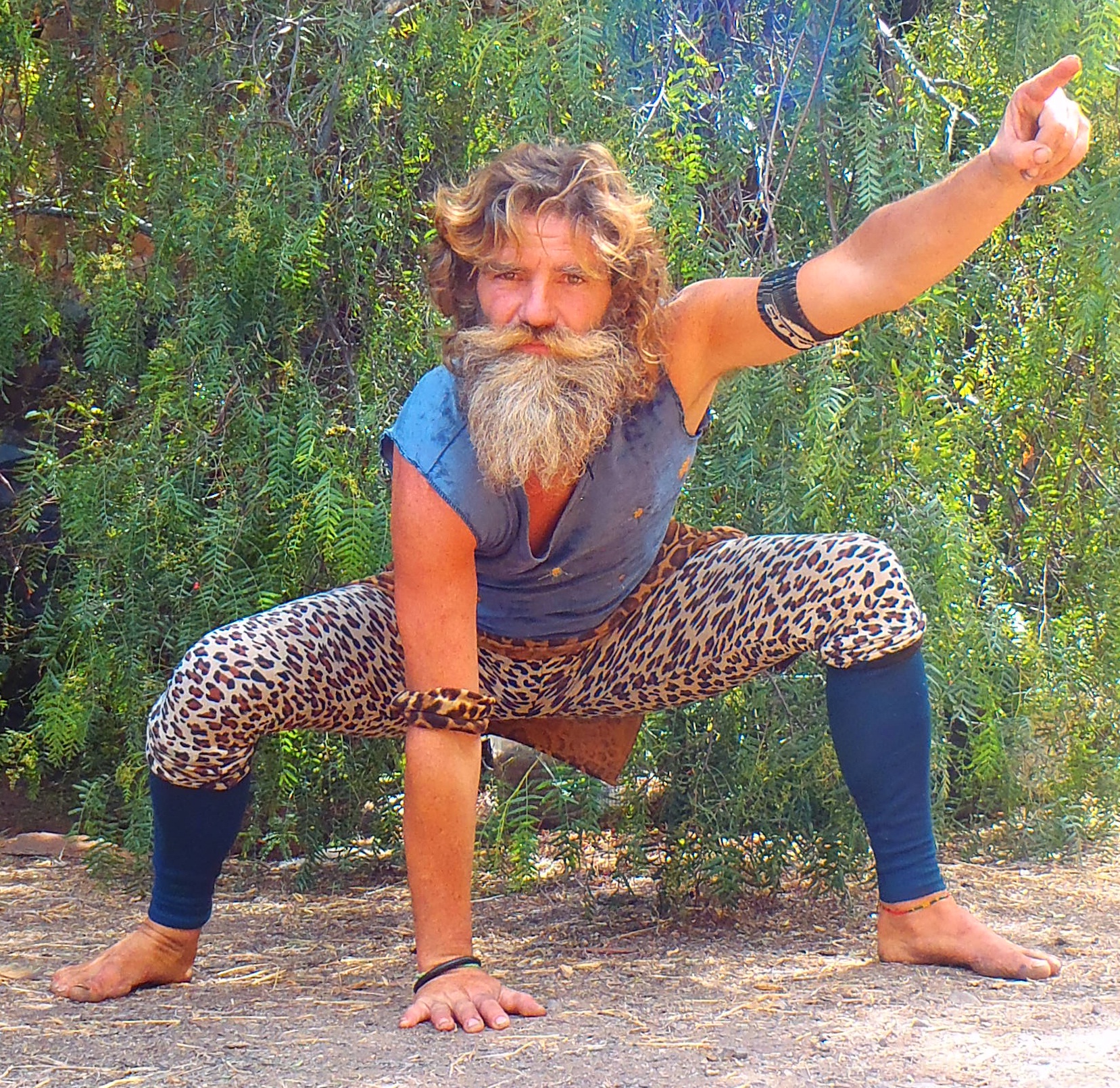
Freigeist von Lebenskunst
German Poet & Philosopher
Dedicated to further
human evolution
This guide is in ongoing development.
Feel free to return and seize the news.
This latest version here is from:
18. of June 2026
Introduction
Tribal revival is in. All over the western world the ageold patriarchal
social systems are dissolving, leaving a newly awakening need for
community life to fill the widening social gaps between evermore
isolated people. Many alternative subcultures are experimenting with
different community types already since the sixties. Especially
attractive seems to be the return to our ancestors´ original tribal
community. The main problem here is just that patriarchally raised
people normally have no idea what a tribe actually is and therefore
they tend to
project their patriarchal education or their rebellion against it onto
their falsely socalled
"tribe". Since I´m personally experimenting with tribal revival attemps
since many years, cofounding communities and coorganizing tribal
gatherings as well as I´m studied archeologist for
hunter-gatherer-cultures with a scientific education in ethnology, I
recognize the desperate need for a sober definition what a tribe
actually is, by what social features it´s defined and how people can
learn to retribalize successfully. Which is no easy task at all since
ethnologically a wide range of quite different indigenous socialization
types are summarized under the quite fuzzy term "tribe". To keep the
definition
sober I´m primarily referring to the oldest form of tribal communities,
which is the original hunter-gatherer-horde like it still can be found
in the San and Koisan cultures of the Kalahari or the Hadzape in
Tansania, which is also well documented archeologically for
ice-age-hunter-gatherers and Neanderthals and is even typical for chimpanzee hordes, so it´s probably the basic social group structure of all hominides.
Many historically younger socalled "tribal communities" still
maintain the hominide horde´s social features or even have elaborated
them more
clearly, but many indigenous cultures also have already eroded typical
horde features by sedentary lifestyles, domestication and totemism.
The vast majority of indigenous cultures are definitely no original
tribal
communities in the sense of a horde any more, but have developed
polygamic or monogamic family structures and matriarchal or patriarchal
power structures - even if quite some ethnologists continue stubborn to
call
them tribes. So the following list of tribal socialization features is
orientated as much as possible at the original horde socialization, not
the heavily corroded late stage post-tribal community life. Social features of tribal lifestyle:
Circle of dearest
A tribe is a friends circle, bound by blood, by family ties or blood brotherhood, born in trust and grown in teamwork, a few dozen people united by ritual and celebration, living and standing together through storm and sun ! ! ! That should be the sacred intention of everybody who want to retribalize successfully. So find your likemindeds, choose your friends wisely and swear each other loyalty. If you just wanna party with some friends from time to time, you may call it your party tribe, but you should know, that this is just a shallow shadow of a deep past and great rebirth of our human tribal life. Selforganized competence hierarchy instead of a power pyramide of domination
Like
all organic natural systems are selforganizing, from the terrestrial
biosphere to ecosytems and biotopes, so does the original human horde
and every type of real tribe. Tribes are basically egalitarian
communities which can be described geometrically as a circle. But
egalitarian does
not mean at all that all members are absolutely equal like socialist
and communist ideologies tend to pretend. Tribes have clear competence
hierarchies which are based in the different skillsets of their unique
members. Since every member knows all the others intimately everybody
knows who is especially good in solving certain tasks. He oder she is
accepted as master of their capability or profession by the others.
Masters gain a socalled "natural authority" which is given by the
others voluntarily by free will for a certain time to solve a special
task. The master has no power whatsoever over the others, he or she is
just the best tracker of prey, leader of the hunt, forger of tools,
speaker of the counsil, singer at festivities and so on. The elders
have the authority of experience, the youngsters the advantage of
curiosity. So in tribal life with it´s everchanging challenges the
natural authority is wandering through the group always given to those
with the highest nececessity of their special gifts for the group life.
Even the chief or the matriarch, if there is such a post in a higher
evolved tribal culture, has no absolute power like a king, but is
elected and controlled by the others in a grassroots democratic process
and
is removed from their post if they fail their given authority.
Gender groups instead of monogamy or polygamyAlltogether it can be said that all current retribalization efforts which tend to an overly egalitarian community or are lead by a king type figure or a power holding core group are failed retribalization attempts. A very common failure is the archetypical situation that one person owns the land of the community and has the power to decide who can come and who has to go. Wheresoever somebody has any kind of power over others that community shall not be called a selforganized tribe, but a privately owned KINGDOM!
In the
original horde life humans tend to build three gender groups, which can
be represented in a geometrical form: In the very midst of the
community life is the children group which is protected by the adults.
The children ar not getting educated, but learn by playfull curiosity
to selforganize socially by voluntary orientation at the adults. Around
the children group selforganizes the womens group or sisterhood. They
maintain and move the camp, organize camp life, care for the children
and are able to defend themselves and their offspring against predators
or other threads. Depending on food resources they can split up or
gather in bigger groups. They have their very own female social life
and can be seen as socially independent from the males. In some
cultures they have even build socalled "amazon groups" who were able to
defend themselves against male war bands. The males represent the outer
ring of the tribe and selforganize in free striving brotherhood bands
with the main task to defend the territory against predators and
organize political alliances with neighbouring male groups. The male
bands have a very well organized pack mentallity and seldom grow bigger
groups than ten men, which seems psychologically based in the personal
ability to manage ten fingers with one mind effortlessly. More advanced
tribal
cultures like the Spartans developed a system of one leader in war or
labor and ten mates, which is the basic social structure of
military units and sport teams till today. Sisterhood and brotherhood
are socially independent from each other and live in their own worlds,
but are cooperating inside the tribe in an intense division of labor.
The modern revival of tribal communities reflects this age old
traditions by building women´s circles and men´s circles. Since both
sexes socialize and think quite differently, it makes definitely sense
to build their own gender worlds und then cultivate their
interconnection. Lesser known, but of essential importance for future
generations of tribe builders is the foundation and maintainance of a
selforganized children group that is not submissed under an enforced
education by parents, but learning in peer groups by playfull
curiosity, observing and copying adult behaviour by free will.
Education in this context would mean only purposefull inspiration of
the children by the adults like in free schools.
From experience I can tell that the main problem in realizing a tribal organization in gender groups is the patriarchal monogamic education of many community builders. Monogamic couples can easily disturb or even destroy the social fabric of the community by isolationist policies or breakups with resulting social upheaval in the group. Also too polyamoric orientated frequent changes of partners can disturb the social group cohesion and lead to competition and group division. And a certain killer for a community is the woke inability to even tell men from women. Best functioning examples for the transition from patriarchal socialization to tribal socialization I saw so far were loose couples one one side and fullmoon orgies like in original horde life on the other side. In those kind of orgies the men have to dance on the tables for the hot ladies who choose their favourites as hero for the night. Well, if you want the original try it with dancing naked together around the fullmoon fire somewhere in nature. Grassroots democracy
A tribal community decides politically by intense discussion, where everybody is heard and every perspective is taken into account. Normally the women´s circle and men´s circle are first discussing for themselves and then meet in a tribal gathering for intergender discussions. The communication culture is extremely high, which means that tribespeople choose their words wisely and speak only, when they can inform or inspire the others with their viewpoint. Such discussions often take a long time, even days and nights, but when the tribe decides eventually, they do it on the highest common denominator, where the whole tribe stands behind the decision and everybody is included with their individual needs. Since most modern people don´t have this level of communication culture and inclusive policy making, they often get stucked in tiring plena and talking circles, where people often just produce their ego and at the end come to a mere majority vote on the lowest common denominator. So the development of a highly evolved discussion culture with the ability to listen and speak empathically is the key to a tribal grassroots democracy. Eventually I would suggest to keep all modern political ideologies clearly outside tribal life, be it leftist oder right wing or whatsoever other policies. They deem me all delusional and dogmatic in their ideas of community. Group cohesion
To build a community that is able to withstand all challenges of life it´s urgently necessary to build a strong group cohesion, not only by elaborated communication, but by team building through collaboration and by community gatherings, where people can experience themselves as integrated part of ONE social organism. Regularly singing together, dancing to the same rythm and sharing intense rituals builds social bonds that can last for a lifetime. Especially the brotherhoods should offer initiation rituals for transitions into a new life phase, like boys getting initiated by the men´s circle into manhood and adult brotherhood during pubercy. To reach group cohesion is quite often a difficult task in our highly individuated western culture, since it tends to bounce between egoic traits and group pressure, with are both not healthy and often emerging together. So often socalled "communities" are just led by an alpha male or an influencal core group, often around a political ideology or religious believe that hinders the free expression of personal opinions and just recreates a typical feudal structure of the patriarchal traditions most people grew up in. Especially dangerous in our times of late stage capitalism ist the capitalization of "tribes" which are just brands to be monetized by a few capitalist leaders on the cost of a mass of exploited followers. So many socalled "tribes" nowadays are everything but a real tribal community but a fake construct with actually quite anti-social intentions. Selecting tribe members and choosing territory
Not everybody is able to cocreate a tribal community
or is fitting into a certain group. Communities who are too open and
want to include everybody often appear as an open invitation for disturbed
people like the dark triade of narcicissts, sociopaths and psychopaths
who can easily destroy the social fabrique. So it makes definitely
sense to elaborate a selection process to attract the right people one
really wants to build a community with. From experience it can be quite
fertile to start with an existing friends circle or build one with new friends and then invite
interested newcomers for a probationary period. Tribal gatherings and teamwork in
collaboration projects are a good test ground to check out the
character, intentions and social potentials of new tribe members. Tribe
membership can be granted after a successfull probation period in a
grassroots democratic decision and celebrated in an initiation ritual
by the whole tribe. Since the tribe should live together the question of the whereabouts appear. It can make sense to organize a bigger house or some nearby appartments or a farm on the countryside for the whole group as common living ground or everybody is living already in the same neighbourhood and it needs only a central meeting point. I would suggest that the common ground is commonly owned or rented to avoid one landowner in the role of a feudal king. The costs can be shared and initial costs can be crowdfunded. When a wealthy donor want to donate to the project they should give the money into a trust to avoid too much influence. When somebody has not much money to invest they can offer common work instead to maintain the living ground. The project can optimally also include workshops, ateliers or other work spaces to create and offer products and services to generate an income for the group members, maybe even in teamwork. Maintaining and spreading tribal culture
When a tribal community has managed their building phase succesfully and consolidated their social cohesion, they can begin to support their own communty life and spread tribal culture into the wider society. The best ways to do that is by collaboration projects and tribal gatherings. While the gatherings are a valuable tool to attract new tribe members and interconnect with other tribal communities, the collaboration projects are immensely important to feed the tribe. Teamwork for housing, for permaculture gardening, for producing goods and services can make the tribe economically quite independent. The collaboration with other communities can even build purposefully an autark super-tribal micro-economy that offers real alternatives to the surrounding capitalistic system. Like in ancient tribal cultures it´s even possible to develop a money free GIFT ECONOMY. The idea that our ancestors used barter before the invention of money is by the way actually false. They just produced what they liked to produce and shared their overproduction with their neighbours by visiting them and bringing gifts. That kind of money free society is not an utopian idea at all, but a common practice that was working fine for the most time of human prehistory and history and in farout rural areas till today. While collaboration projects and gift economy lead to economic independence, the invitation to tribal gatherings actually cocreates tribal culture. Such gatherings are not only meeting points and informal exchange, but can offer the actual development of tribal culture by workshops and rituals, where people can refine their personal and collective tribe building capabilities. Since most Westerners never learned fully to socialize in a cohesive community, but were instead trained for a society of egoic competitors there´s definitely a lot to learn and experiment. A typical tribal gathering in ancient times was for three days and nights around full moon and certain annual festivities like the solstices. But it´s also possible to stretch gatherings into a few weeks or a whole month like for example the rainbow gatherings from new moon to new moon. Gatherings should optimally being held in natural environments, where the collective connection not only between humans but also between humans and the surounding natural world can be achieved. To offer tribal education it can also be quite fertile to build tribal education projects and community schools, where interested people can gather personal and collective competencies for tribe building and collaboration projects. Tribal social clubs can act as tribalization hubs in the local neighbourhood, even in urban environments. Tribal culture should always spread by it´s appealing social attractivity, not by any kind of ideology or even capitalistic monetization strategy. A shared spirituallity can act as a binding agent for communities, but it´s important to keep the religious influence at bay and prevent the development of cults or sects. The spirit of a real tribal community is growing on it´s actual sociallity, not on any kind of mental construction. And eventually tribe builders should be able to experiment with different forms of community life and social self-organization, since we try to restart tribal life from the baseline of millenia of patriarchal indoctrination in a society that has grown out of the tribal stone age into a high tech civilization with completely new challenges. Tribe building under such conditions can be seen as the greatest social cocreation adventure of our times! -------------------------------
Who´s interested now
in deepend informations and professional tribe building education can visit my WORKSHOPS and SEMINARS on my education platform EVOLUTIONSKULTUR (click), watch my free video tutorials or read the following infotexts. Please feel free to subscribe to my NEWSLETTER to seize the latest news about events and publications: |
CHILDREN HORDES (click)
FOUNDING GUIDE FOR SELF-ORGANIZED
TRIBAL CHILDREN GROUPS
NEOTRIBAL EVOLUTION (click)
Essay series about my newest thoughts
and visions about further neotribal
evolution possibilities
The GENEA (click)
How tribes were destroyed
and patriarchy invented
CONTACT ME:
E-mail: kontakt@freigeistvonlebenskunst.de
or direct contact via my INBOX (click)
SUBSCRIBE TO MY NEWSLETTER:
|
|
----------------------------
HOME